Kid with Backpack

Back Pack Safety

As children, teenagers and young adults return to school or college, many suffer back pain created by their backpacks.  Here are a few tips to prevent back pain:

  1. The backpack should not weigh no more than 5-10 percent of his or her body weight. If the weight is too heavy, they will tend to lean forward causing under stress on the lower back and pulling on the shoulders that could potentially cause lower back and neck pain.
  2. The shoulder straps should be wide and placed on both shoulders. Padded straps are a must. The shoulder straps should be adjusted so the backpack does not hang down any further than a couple of inches below the waist.
  3. Smaller backpacks help. It seems the bigger the bag, the heavier the load.  Backpacks with several compartments seem to help disperse weight more efficiently.
  4. If the backpack is too heavy, it may mean parents need to contact a teacher and find a solution to prevent an injury.


Remember, it is not normal to have back or neck pain as a child.  If you have any questions, please contact us 320-253-5650.

Pregnant Woman

Pregnancy Conditions Chiropractors Treat Everyday:

Pregnancy Conditions The Doctors At Minser Chiropractic Clinic Treat Everyday:

  1. Pubic bone pain.  The pubic symphysis is affected by the hormone Relaxin which allows the ligaments that help support and stabilize the pelvis and sacrum to relax.  Sometimes this causes pain when the it allows abnormal or to much motion to the pubic symphysis.  This can cause pain and dysfunction.  This condition can make it very hard to walk and sit.


  1. Sacroiliac Pain or SI joint pain.  This is one of the most common conditions we treat at the clinic.  This dysfunction of the SI joint can also cause sciatica or leg pain.  This condition can become almost debilitating in pregnancy.  Getting the sacrum and pelvis to stabilize and the surrounding muscles, tendons and ligament to support the growing uterus and pelvic floor is a main goal of chiropractic treatment.


  1. Lower back pain. The increased weight of the uterus and all the changes the body goes through in pregnancy can change the way the body moves.  These changes can shift the central of gravity of the lower back causing inflammation of the joints of the lower back causing pain.  Realigning and normalizing joint movement helps relieve and resolve lower back pain in pregnancy.


  1. Mid and upper back pain. The posture of the pregnant women is ever changing as the body goes.  The increase of the curve of the lower back can cause stress to the mid back and upper back causing pain.  The muscles tighten to help support the changes but they in turn can cause discomfort even to the point of causing headaches.


  1. Round ligament pain. The ligaments that support the uterus can stretch and cause pain where they attach to the abdominal wall.  This can cause pain on the lower abdominal area.  This pain can get very sharp at times. If you picture the uterus as a hot air balloon and the cervix as the basket, the round ligaments would be the ropes that anchor the balloon to the basket.


If you have any questions about chiropractic care and pregnancy, please do not hesitate to contact the clinic.   320-253-5650.

Exercise and Autism

One of the natural treatment options for autism is exercise.  Exercise is important for children and adults with or without a disability and helps promotes a healthy lifestyle. Incorporating physical activity daily can help reduce target behaviors that may arise with change.

Physical activity also helps reduce the chance of being overweight, causing more physical health problems such as cardiovascular diseases or even diabetes.  Being part of a team or working out with others improves their social interaction skills with others and works on improving their attention span.

Individuals with autism may lack flexibility, coordination and/or balance which can make it harder for one to exercise. Lacking any of those abilities makes exercising more important to emphasize on. There is no correct answer to what program an individual with autism should engage in, but it should be surrounded by what they like to do. If they like the water, incorporate opportunities during the week to go to the local gym or community center to swim.

The main goal is to maintain a healthy lifestyle by keeping their body moving and staying physically active to avoid diseases that come with being overweight. For a more specialized exercise program, contact Rachel at Minser Chiropractic Clinic.

Chiropractic and Autism

April is Stress Awareness Month, IBS Awareness Month, Community Service Month and Women’s Health Month.   It is also Autism Awareness Month.  While stress, IBS, women’s health issues are all very important and topics we encounter every day, Autism pulls at my heart.  As any parent who has a child with Autism Spectrum Disorder well tell you, it is very challenging.   Autism Spectrum Disorder is a complex set of developmental disabilities.  Every child may experience autism very differently and that is what makes it a “spectrum” disorder.

It is considered a neurobehavioral disorder that includes issues with social interaction, language development and lack of communication skill.  Most have issues with sensitivity to sensory input.  It could be touch, taste hearing or smell.  These individuals may response differently to people or may want to harm themselves.  They may have a motion they like to do repetitively such as rocking or pacing.  They have learning and comprehension issues.  Autism is more common in boys than girls. One in 42 boys is diagnosed with autism according to the Center for Disease Control and Prevention.   Autism appears to present itself between the ages of 2-3 but can be as early as 18 months.

Possible signs of Autism:  avoids eye contact and wants to be alone, struggles with understanding other’s feelings, nonverbal or language delays, repeats words over and over, gets upset by change, has interests that are very restricted and almost obsessive, has often intense reactions to sound, lights, smell, taste, or textures.

As mentioned earlier, it is considers a neurobehavioral disorder.  The “neuro” part is what chiropractic strives to help in an autistic individual. Preliminary studies indicate that the chiropractic adjustment may influence sensorimotor integration.  We, of course, encourage further research in the influence chiropractic has on their developing nervous systems.  Given the ineffectiveness of a majority of pharmaceutical agents, parents need to know there is help in regards to autism.

Chiropractic looks to the body to identify areas of the nervous system that may not be functioning optimally.  Are the cranials, vertebra, pelvis, sacrum, atlas all moving properly?  Are altered biomechanics of the spine causing more stress on the nervous system than the brain can process?    Majority of autistic children have other complaints such as sleeping issues, GI complaints, allergies and lack of motor control.  These are all issues that should be address. Do they have lingering primitive reflexes?  Do they have posture issues? Do they have a head forward posturing?   Do they have flat feet?  Do they lack nutrition because they will only eat certain foods?  Are these food nutrient packed or processed?   These questions are just the tip of the iceberg when treating an Autistic child/teen or adult.  At Minser Chiropractic Clinic, we strive to make any child’s life easier and embrace each child’s individual needs and gifts.  Isn’t time your child lives up to his or her potential?  Yours for better health….naturally!

 

5 Important Outdoor Exercise Tips

Though most of us can’t wait for the snow to melt, the transition from Winter into Spring can be a tricky one for outdoor fitness. Our exercise department put together some tips for your next outside workout.

  1. Dress “dry” not just “warm.”- the quickest way to lose body heat is by getting wet. Getting wet by sweat or puddles can leave you chilled and miserable.
  2. Cotton isn’t for workout wear– Cotton soaks up moisture and holds it in.
  3. Protect your skin– Winter time means dry air. It’s important to be hydrated inside and out. Drink plenty of water and moisturize your skin to prevent cracking.
  4. Don’t overdress– Overdressing can often lead to making you too hot and sweaty. It also puts you at risk for dehydration because of excess perspiration.
  5. Protect your extremities– Blood flow is pushed to the core of your body, leaving less blood (and warmth) available to the hands and feet. Wear gloves or mittens; you can take them off if you get too hot. Put on some moisture-wicking socks for your feet.

Exercising is important to achieve overall health. Think of these tips next time you’re getting ready to go on an outdoor run!


Facet Syndrome

A common cause of back pain is a condition called facet syndrome.  First, let us understand what a facet is and what its job is to help your spine stay strong.

Facet joints are located on the back part of the spine and each vertebra has 2 sets, one on each side. A facet joint is the part of the vertebra that helps with movement and motion.  These joints are shaped differently in different parts of the spine and allow for one vertebra to move with the one above and below it.  Part of their job is to limit extension (bending backwards) and rotation (twisting). They provide stability of the spine.

These joints are controlled by the muscles of your spine and have a close relationship with these muscles.  Did you know your muscles are controlled by the nerves of the spine?  Your muscles, joints and nerves all have to work together to keep you healthy.

FacetAn injured facet joint can become inflamed and cause pain, stiffness and soreness.  These injuries can be from a direct injury such as a fall or micro–trauma.  Micro-trauma is usually a result of repetitive injuries or doing the same motion over and over many times.  A facet injury may make it difficult to sit at a computer or watch TV.  It may be painful to bend or lift.  You might experience stiffness in the morning when trying to get out of bed.

If one of the facet joints is not functioning properly, pain and dysfunction can be a result.  The pain level often depends on the severity of the injury or lack of motion to the facet joint.

A very successful treatment of facet syndrome is a chiropractic adjustment to help restore normal motion of the facet joint.  This gentle technique is the most effective way to help the injured joint heal.  In some cases an adjustment is necessary to help relieve any muscle irritation or spasm.  A home exercise program may be prescribed to help strengthen the surrounding muscles so they can support the facet joint and help prevent re-injury.

As always, Chiropractors advocate dealing with the underlying neurological, mechanical and muscular problems.  If you or a loved one are suffering with back pain, chiropractic care is waiting to help.

What Everyone Should Know about Massage

We asked our massage therapists to compile a list of frequently asked questions they get asked about massage therapy all the time!

You can also learn more about Massage Therapists!

  • What is a knot and Why do I have them?
    • A knot is your muscle fibers contraction to protect an underlying inflamed nerve. This inflamed nerve is caused by a subluxation (misalignment) of a joint. This joint could be in your neck, shoulder, back, hip, the list goes on and on.
  • Why does pressure from a massage release the knots?
    • Pressure from massage helps free up those contracted muscle fibers. A knot is similar to your “check engine” light in your car. The knot is signaling to your body that something deeper is going on in the body, aka a subluxation.
  • Why do I feel sluggish after a massage?
    • When you feel a bit sluggish or slow after a massage, that means you reached the deep relaxation point. This cues your body to into a deep relaxation state and when your body comes out of this state, you can feel a bit sluggish. During this time your body has lowered stress hormones and increased the feel good hormones.
  • How many sessions/massages do I need to “fix the problem”?
    • It depends. Various variables affect your body and how it can respond to massage treatment. How much water do you consume? Do you exercise? What does your posture look like at work? Are you recovering from an injury? What does your diet look like? The list of questions goes on and on.

Have any questions that aren’t on the list? Let us know!

Check out the different types of massages we offer!

Health Benefits of Being Grateful

We learn the importance of saying “thank you” as we grow up and are taught this habit because it’s “good manners.” This childhood lesson is extremely powerful and goes beyond being polite. There are so many health benefits of showing gratitude and that is what the month of November is about…Gratitude!

  • Gratitude helps you sleep better! Instead of lying in bed, thinking about worries, stress, and anxiety, think about what you’re thankful for! Mentally make a list of things you’re grateful for and it can help induce a relaxation response, causing you to drift off to sleep!
  • Gratefulness is linked with optimism, which is linked to a better immune system! A study from University of Utah stated that stressed-out law students who were optimistic had more immune-boostinSmilingFamily02-18-2011----g blood cells than students who were pessimistic.
  • Improves psychological health! Gratitude reduces toxic emotions like envy, frustration, and regret. Gratitude effectively increases happiness and reduces depression.
  • Gratitude improves self-esteem! It’s able to reduce social comparisons. Grateful people are able to appreciate the accomplishments of others rather than become resentful and as a result they don’t compare themselves to others as often.
  • Reduces stress! Feeling grateful has a positive impact on helping people deal with everyday problems, including stress.
  • Improves overall health! Gratitude helps lower blood pressure and improves cardiac health. It can result in experiencing fewer aches and pains!


8 Tips for a Fresh Fall Start

The temperature drops, the leaves change color, and we think of the holidays to come. Fall is a great time to find a fresh start for ourselves and our health! Here are some tips to help you get a good fresh start!

  1. Enjoy fresh fall produce. Fall is a great time to enjoy a variety of vegetables. Pumpkin and squash are full of potassium and vitamin A.
  2. Stay well rested. Time changes during the fall season can be hard to manage. It’s recommended that you modify your sleep patterns to the outside environment. This will keep you alert in the morning and sleepy hikingat night.
  3. Re-energize with exercise! Try a nature walk through the woods and admire the fall colors. Take a hike through an apple orchard or pumpkin patch.
  4. Get your spine checked. Boost your immune system to avoid colds and flus by maintaining spinal health with a chiropractic adjustment!
  5. De-stress with friends. Plan a weekend to take a break and strengthen friendships. You can even plan an exercise together to motivate each other!
  6. Remember to stretch. It’s cold outside, which means muscles can be tight. Before doing fall clean up take time to stretch your back, arms, and legs.
  7. Focus on finances. With holiday season approaching, we tend to forget to watch how much we spend. Start watching your spending by preparing a budget to avoid financial stress.
  8. Have fun! No matter what your day brings, remember to smile and enjoy the good things! Be thankful for the great things that surround you everyday!


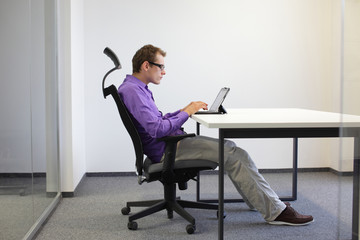
Is Sitting Harmful for your Health?

It has been said that sitting is the new smoking. It has been linked to an increased risk of diabetes, cardiovascular disease, and early death. But with most of us logging hours at desk jobs (and recovering from hard workouts with Netflix binges), can it really be that bad?
Yes, indeed!!

When you are in an improper, slouched, or seated posture for extended periods of time, there are physiological changes in the body. In addition to the proven disease risks, things start to lock up. Tissues can weaken and the effects can be degenerative.

It is similar to the idea of time spent in a cast: when muscle tissue is continually immobile, it shortens and shrinks over time and weakens.

Movement brings hydration and nutrients to the tissue and activity keeps it healthy, so even though our jobs and evolving mobile technologies are making us more prone to sit and press buttons, we need to think actively and sit actively.

Image result for person slouching in chair


In other words, don’t just get up for breaks, but rather do things that will keep your tissues mobile and fluid throughout your day and life. Spending 8+ hours at your desk doesn’t have to ruin your body.


Add these five daily movements to your routine:

  1. Roll your feet: Feet can really stiffen up when you sit for long periods. Take a couple breaks during your day and roll each foot on a massage ball or small frozen water bottle.
  2. Do some wall squats: Sit with your shoulder blades and lower back against a wall, hips and knees at a 90-degree angle. Hold for a minute, then return to a standing position, and do 3 reps.
  3. Stretch into a lunge: Constant sitting shortens the hip flexors, so you need to stretch the musculature of the hips and quads. Step your left leg for-ward into a 90-degree lunge, allowing the right knee to hover over the ground behind you. Then switch legs. Try to work this in 3-4 times a day.
  4. Reverse your rotation: During prolonged sitting, we tend to collapse inward, rounding our shoulders and jutting our necks out and forward. To reverse this, move to the edge of your chair and sit on your tailbone. Leaving your arms at your sides, open your chest and rotate your hands out, letting your shoulders move back. At the same time, widen your hips by rotating your feet out. Hold for 10 seconds and repeat 10 times.
  5. Extend your back: Stand and place the palms of your hands at your lower back to lock out your lumbar spine and prevent over extension. Then gently lean back as far as you comfortably can. Do 10 reps once or twice a day.

If you want more tips like these or are looking for help reaching your fitness goals, talk our exercise specialist today! 320-253-5650